
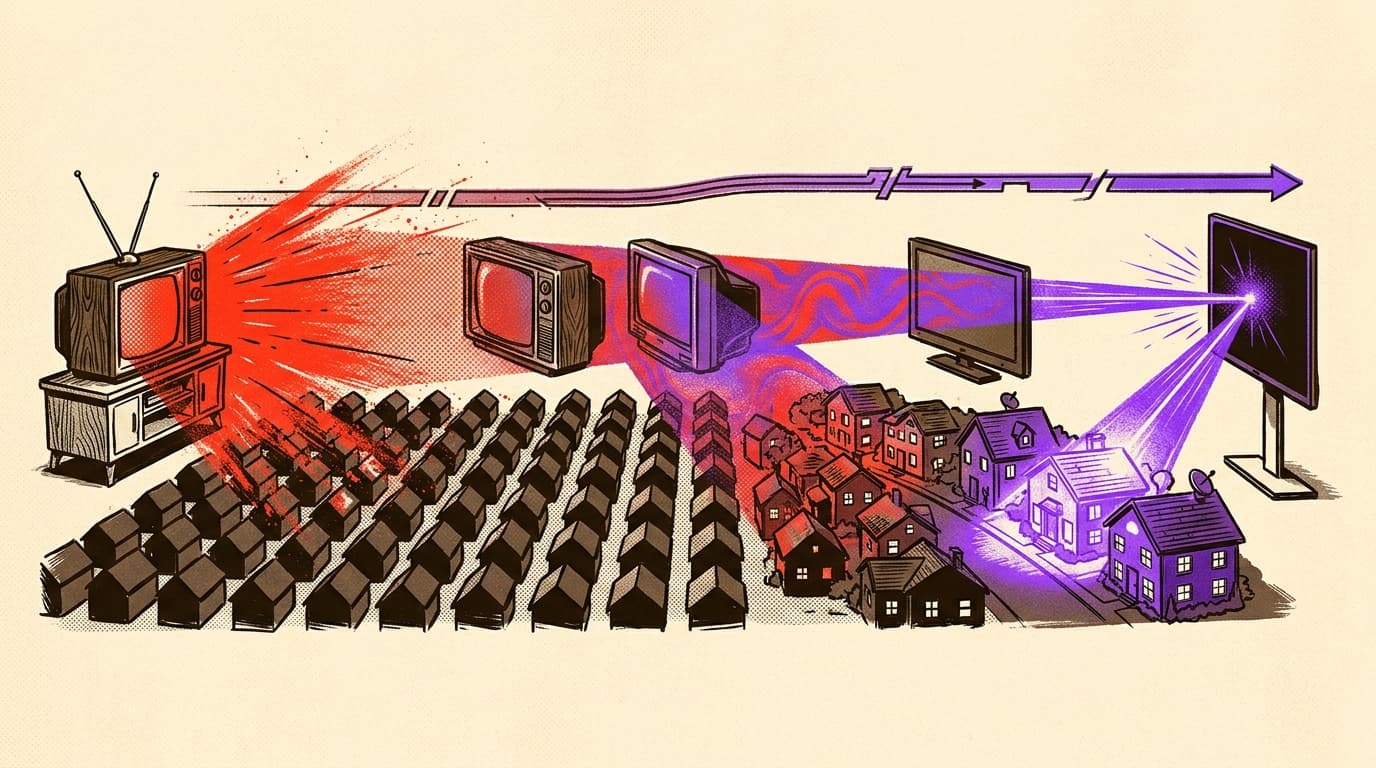
Over the past decade, television advertising underwent its biggest transformation since the introduction of color broadcast. For generations, traditional linear television was the king of brand awareness. Advertisers bought time slots on networks based on estimated ratings (gross rating points or GRPs), hoping their message reached the right audience.
Today, viewing habits have fundamentally changed. Viewers have migrated from traditional cable and broadcast packages to on-demand streaming services. Along with this audience shift came a complete rewrite of how TV advertising works.
Here are the biggest lessons learned from ten years of watching TV advertising evolve from linear to digital.
Lesson 1: Broad Reach Is Less Valuable Than Precise Relevance
In the era of traditional linear TV, businesses paid for mass distribution. A local car dealership might pay to reach an entire metropolitan area during an evening news broadcast, even if 95% of those viewers were not currently in the market for a vehicle.
Digital TV advertising changed this model. Over the last decade, we learned that targeting a smaller, highly relevant audience yields better results than showing an ad to millions of uninterested viewers. Modern streaming platforms allow businesses to reach specific geographic areas, apps, content types and users. Instead of purchasing KTVU in the entire San Francisco Bay Area, now you can target individual zip codes and contextually relevant apps.
Lesson 2: Measurability Changed Expectations
One of the biggest flaws of traditional broadcast television was guesswork. Advertisers relied on delayed sample surveys to estimate how many people saw an ad, with almost no direct way to measure actual business outcomes.
The shift to digital media brought web-like tracking to the living room. Advertisers now expect clear metrics:
- How many full ad completions took place?
- Which specific regions responded best?
- Who came to your website after seeing the commercial?
Digital TV proved that video ads can be evaluated on real performance, not just estimated gross rating points.
Lesson 3: Content Consumption Is On-Demand and Fragmented
Ten years ago, viewers tuned in at specific broadcast times. Today, content consumption is completely on-demand. Audiences are spread across dozens of streaming apps, smart TV channels, and digital networks.
For advertisers, this means campaign planning can no longer rely on buying spots on two or three major cable networks. Reaching modern viewers requires platform-agnostic distribution that follows the audience wherever they choose to stream.
Lesson 4: Production Agility Defeats Big Production Budgets
In traditional television, companies spent months creating a single high-budget commercial to run for an entire year. In a fast-moving digital environment, content wears out quickly.
The last decade showed us that agility beats perfection. Advertisers who can create, test, and update video content rapidly achieve far better engagement than those relying on static year-long campaigns.
Summary: A Smarter Era for Screen Advertising
The shift from linear broadcast to digital streaming turned television from an expensive brand luxury into a precise performance channel. As digital TV advertising continues to mature, the focus remains on keeping campaigns targeted, measurable, and easily adaptable.
Ready to Advertise Like It's This Decade?
Ten years of lessons come down to one idea: pay for the viewers who matter, and measure what happens next.
Trade estimated ratings and blanket coverage for targeted streaming placements you can actually track, adjust, and improve week over week.
👉 Build Your Modern Streaming TV Campaign and put a decade of advertising lessons to work for your business!