
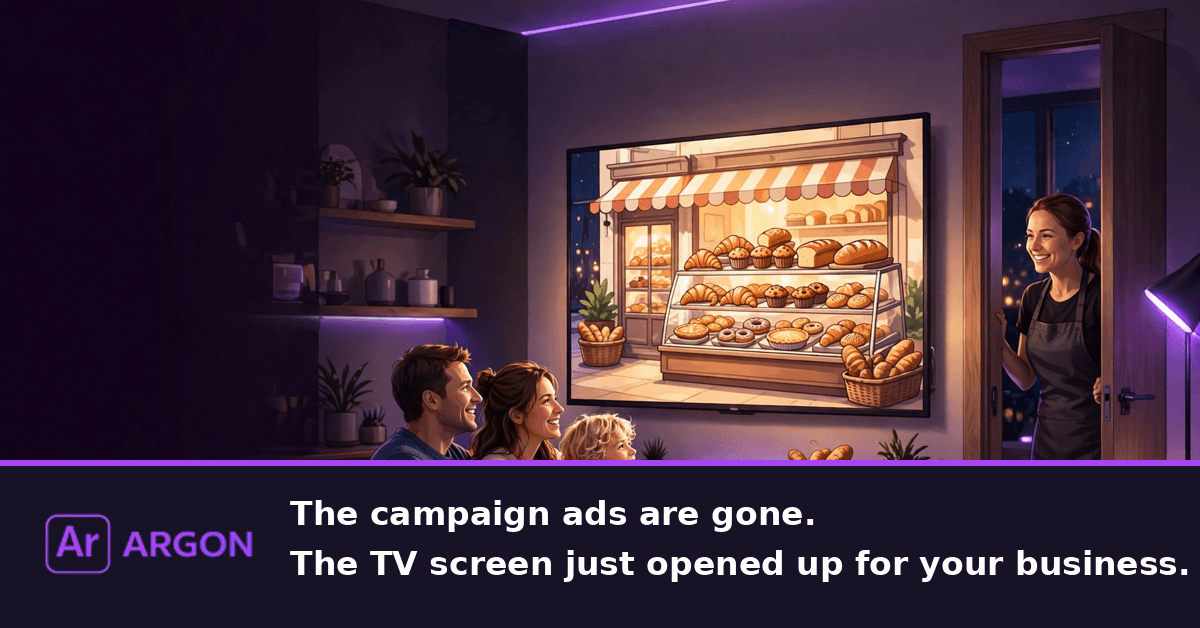
If you watched any TV in October, you know what it felt like. One campaign ad after another, all day, every break. By late October, the 2026 election cycle had become the most expensive on record in nominal dollars, with about 11.2 billion dollars spent or reserved on political advertising, according to AdImpact figures reported by the Associated Press. A big share of that money went to the same local TV and streaming screens a small business would want to be on.
Election Day was November 3. Those ads are gone now.
That matters more than it might sound. Political campaigns buy up local TV and streaming inventory in the fall and can push prices up for other advertisers while they do it. When they leave, regular advertisers have fewer political buyers to compete with. The election advertising rush on TV just ended, and the most valuable shopping weeks of the year are about to start.
Businesses seem to have noticed. Modern Retail's holiday marketing research, published November 2 and based on a survey of 90 brand and retailer professionals, found that 45 percent of respondents plan to run streaming TV ads this holiday season. Last year it was 23 percent, so the number roughly doubled in one year. Plans for traditional TV ads jumped too, from 13 percent to 33 percent. At the same time, the tactics that dominated recent holiday seasons are losing ground: gift guides fell from 50 percent to 31 percent, and influencer haul and unboxing videos dropped from 33 percent to 19 percent. More of these marketers plan to use the biggest screen in the house.
The broader numbers point the same way. In its September update, the IAB raised its 2026 growth forecast for connected TV advertising to 15.6 percent. And research commissioned by the Television Bureau of Advertising found that 42 percent of respondents said linear TV was the most important influence on their awareness of a product or service. This finding is about traditional TV, rather than streaming. Holiday shoppers are watching TV, and TV is still where people first hear about things.
So what should a small business actually do with this window?
First, do not sit on it. The strong stretch runs from now through about mid-December. A local advertiser who starts this week gets a full month of shopping intent. One who waits until December 15 gets what is left.
Second, keep the ad simple. One business, one offer, one reason to act now. A holiday deadline does the persuading for you, so the ad just needs to make sure people know your name and what you sell. This is not the moment for a complicated brand story.
Third, run where your customers actually live. A shop in one town gains nothing by paying to reach the whole state. Local targeting is the whole reason TV works for a small budget now: your ad shows up in the homes around your business, on the shows people are already watching.
Fourth, start smaller than you think you need to. A focused local run through the best two or three weeks of the season can teach you more than the same money spread thin across two months.
A few years ago, none of this was realistic for most small businesses. TV meant agencies, long commitments, and minimum spends that ruled out anyone without a serious marketing budget. That wall has come down. Making an ad is quick, running it locally is affordable, and right now the election advertising rush is over.
If you want to see what your business would look like on TV, you can make your first ad with Argon Ads for free and watch it before you spend anything. The window is open. It will not stay this open for long.
Sources
- Associated Press: AdImpact's late-October political advertising spending and reservations
- AdImpact: 2026 election cycle spending projections and the broadcast/CTV breakdown
- Modern Retail: Brands' holiday marketing tactics shift in 2026, November 2
- Digiday: The 2026 guide to holiday marketing strategies
- RetailWire: Summary of the Modern Retail findings
- IAB: 2026 Outlook Study, September update
- TVB: 2026 Purchase Funnel Study